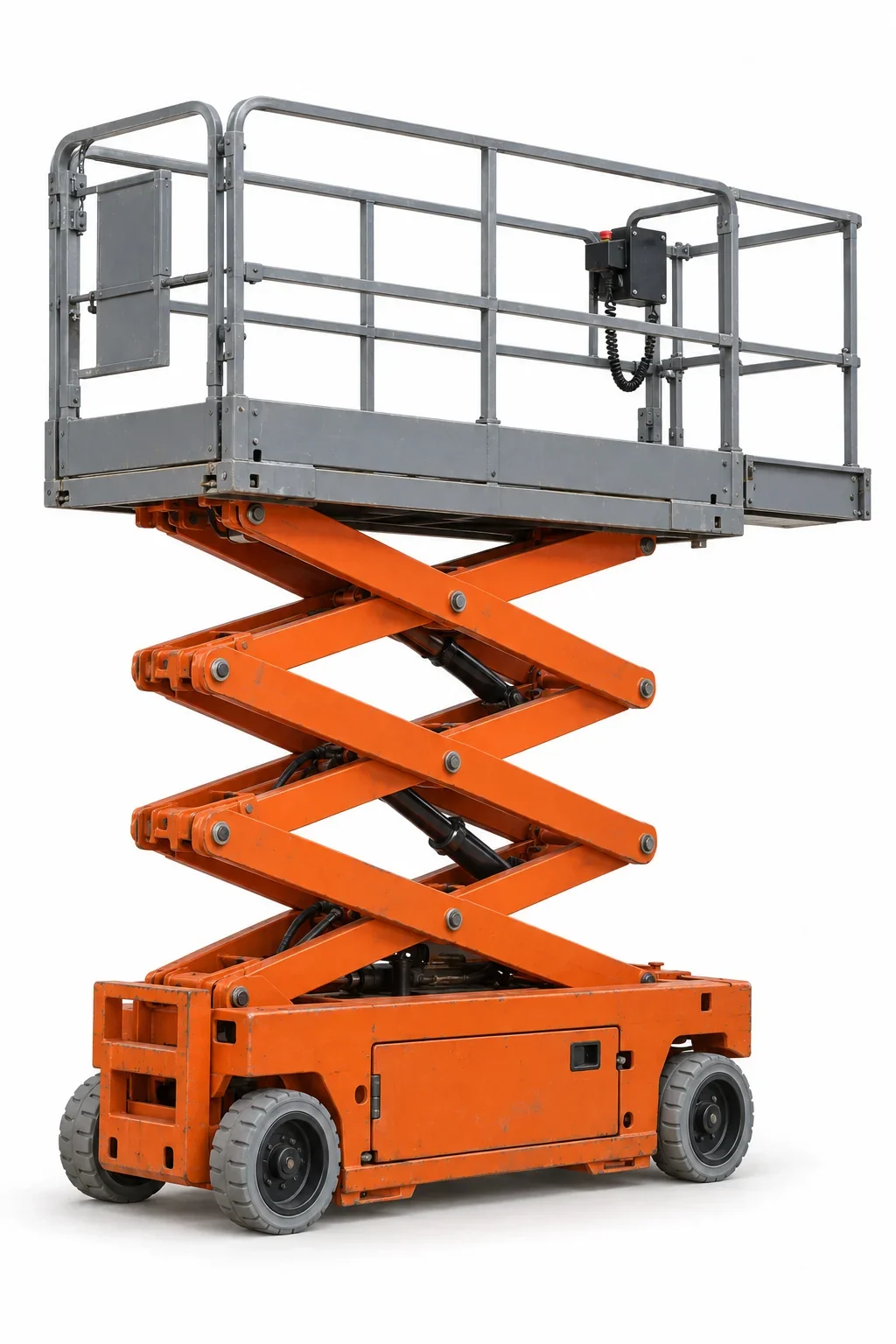
Read the ground before the spec
- Surface type: Compacted base, broken asphalt, or native rocky ground each demand different traction and clearance.
- Slope and drainage: Determine approach grades to staging zones and any cross-slope along the work face.
- Access constraints: Measure gate widths, curb cuts, and the tightest turn between the street and the work pad.
Platform size versus maneuverability
- Wider platforms carry more materials but need more staging room. Small courtyards or utility easements may force a narrower chassis.
- Guardrail height and deck extensions affect reach along building skins, signage, or canopies when the unit can sit close to the face.
Riverside-specific factors
- Heat in summer can stress hydraulics and reduce electric hybrid runtime. Midday scheduling and shade placement influence productivity.
- Older facades and stonework near civic areas may require careful setback distances. Consider whether the machine weight and tire tread pattern suit hardscape edges.
When to switch categories
- If the lift cannot sit beneath the work due to planters, retaining walls, or uneven setbacks, see /boom-lift-rental/ for articulating or telescopic reach.
- Mixed indoor/outdoor tasks may need an indoor unit for slab work; compare /electric-scissor-lift-rental/ for that portion.
Typical Riverside use cases
- Exterior lighting, signage, and canopy maintenance on mixed-surface lots
- Mechanical and utility work where unfinished pads or rocky fringes are present
- Envelope repairs on slab-adjacent walls when the platform can stage right below the task
Actual conditions, the selected unit’s instructions, and site procedures govern elevated work.